Punch To Break A Mountain How to Farm Gems Fast
Core destroys, difficulty pacing, and co-op gem efficiency.
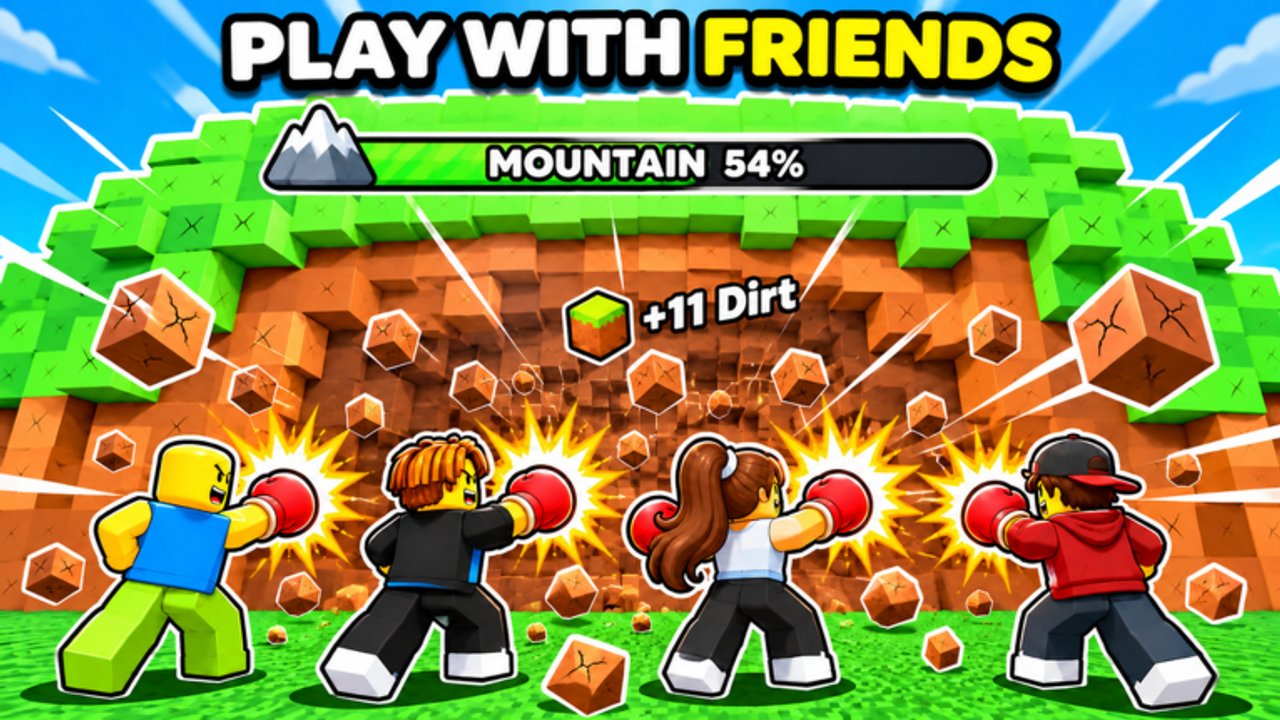
Gems are the long-term currency of Punch To Break A Mountain. Cash comes from selling block drops; gems come from destroying the Core. This farming guide turns that rule into a repeatable plan: pace Easy → Medium → Hard, spend cash so Cores actually die, use skill-tree mobility to cut downtime, and optionally multiply clears with up to four friends. It pairs with How to destroy the Core for the mechanical focus-fire details.
The embedded video above is a real mountain-destruction session useful for pacing visuals. One embed per page — keep reading for the gem economy framework rather than copying a single creator’s exact ranks.
Gem sources (what actually pays)
- Primary: Core breaks on Easy, Medium, and Hard
- Secondary: occasional event gifts, shop sinks, or future codes that grant gems (Codes Hub — still 0 active as of November 2026 trackers)
- Not a substitute: Spin Wheel exclusives and gloves help clear speed but are not a gem printer by themselves (Spin Wheel)
If your gem wallet is empty, you are not failing the shop — you are not finishing Cores. Return to the loop: punch → collect → sell → upgrade → Core.
Easy → Medium → Hard pacing
Treat difficulties as gem throughput tiers, not ego checks. Full comparison lives on Difficulties.
Easy gem farm
Goal: learn sell timing and land consistent Core finishes. Buy power and backpack first so you are not jogging with a full bag (Upgrades). Easy gems fund early class/glove goals without tilting you into a two-hour fail.
Medium gem farm
Promote when Easy Cores feel routine and punch area ranks are online. Medium raises HP and usually raises gem value per clear. This is the sweet spot for most mid-game wallets: still readable routes, better payout than Easy spam alone.
Hard gem farm
Hard is for squads or well-upgraded solos with flight/jumps unlocked (Skill tree). Dying on the outer shell for forty minutes is negative gem/hour. If Hard fails twice in a row, drop to Medium and buy the missing bottleneck.
Cash upgrades that raise gem/hour
Gems do not buy the four tracks — cash does — but cash spending decides how many Cores you finish per session:
- Power until breaks feel snappy on your target difficulty
- Backpack until sell trips stop dominating the clock
- Punch area to open shelves toward the Core faster
- Speed once travel is the obvious waste
Use the Upgrade planner as a shared language. Starving backpack to “save for gems later” is backwards: without clears, there are no gems.
Skill-tree mobility multiplies farms
Higher jumps and flight cut the dead time between faces, sell pads, and Core angles. Mobility is a gem stat in disguise. Prioritize those nodes before cosmetic detours. A mobile farmer on Medium often out-gems a stronger but grounded farmer who walks every reset.
Co-op gem efficiency
Solo is fine. A coordinated party of up to four friends (Co-op) raises gem/hour when you:
- Focus fire the Core instead of decorating four outer faces
- Assign a caller for thin-shell sightings
- Keep at least one solid backpack so sells do not stall DPS
- Agree difficulty before the invite — two new players on Hard waste everyone’s time
Each account still needs personal upgrades and still banks its own progression. Co-op speeds the clear; it does not delete the need for power/area.
Session templates
30-minute gem snack
- Claim free Spin and check Codes
- Two Easy or one Medium Core with strict sell discipline
- Spend cash on the bottleneck only
90-minute gem block
- Warm up one Easy clear
- Chain Medium clears with flight online
- Optional Hard attempt if the party is ready
- Bank gems; resist panic shop spending mid-fail
Event-week gem push
During windows like Thanksgiving 2026 or after mystery patches such as Secret Update, expect traffic spikes (~1M+ visits on the place overall, concurrents often hundreds to low thousands). Join early, claim Spin, then farm Medium for stable gem/hour instead of fighting overcrowded Hard lobbies if performance dips.
Leaderboards vs gem grinding
Fastest-win and No Robux boards (Leaderboards) optimize time, not wallet size. A leaderboard practice run can still pay gems, but pure farming should favor reliable finishes over risky record attempts. Separate the goals in party chat.
Anti-patterns that kill gem income
- Sitting on Hard because “Hard pays more” while failing repeatedly
- Ignoring punch area so Core shells never open
- Skipping daily Spin during long farm days
- Buying random executors promising auto gem farms — no verified game-specific scripts exist for this title (Scripts, Script Safety)
- Hoarding cash during a stuck Core instead of buying the next power rank
Related pages
Farm gems by finishing Cores on purpose. Pace the difficulty, spend cash like an engineer, move like a scout, and bring friends only when focus fire is real. The mountain pays players who close objectives — not players who punch scenery forever.
Frequently Asked Questions
Quick answers to the most common questions.
How do I get gems in Punch To Break A Mountain?
Destroy the Core. Gems are the Core payout. Cash from selling drops funds the upgrades that make Core clears possible.
Should I farm gems on Hard immediately?
No. Clear Easy consistently, then Medium. Move to Hard when power, area, backpack, and mobility support reliable finishes.
Does co-op increase gem income?
Yes when the party focus-fires the Core. Up to four friends can raise clears per hour; uncoordinated punching does not.
Do skill-tree flight nodes help gem farming?
Absolutely. Flight and higher jumps cut travel time between faces, sells, and Core angles, raising gems per hour.
Are there scripts that auto-farm gems?
There are no verified game-specific scripts for this title on major script sites. Use fair play — see Scripts and Script Safety.